



Medical debt recovery best practices are the policies and communication approaches healthcare providers use to collect unpaid patient balances while protecting the patient relationship and staying compliant with HIPAA and the FDCPA.
Effective medical debt recovery balances firm, consistent follow-through with genuine respect for the patient. Done right, it protects your revenue and your patient relationships at the same time. Done wrong, it risks both. This guide covers what ethical, high-performing medical collections actually looks like, from the first patient contact to legal follow-up, so your practice knows what to expect and what to demand from any collections partner.
Key Takeaways
- Acknowledge the reason a patient has not paid before moving toward resolution. Skipping this step makes escalation harder, not easier
- The most common reason patients don’t pay is not always financial; sometimes it is a dispute, a coverage misunderstanding, or unresolved dissatisfaction with care
- Compliance with HIPAA and the FDCPA is the legal floor, not the full standard. How patients feel about the interaction shapes your reputation long after the balance is resolved
- An objection from a patient is not the end of the collection conversation; it is the beginning of the actual work
- Threats of legal action or credit reporting must be genuine to be ethical. Empty threats are where the industry earns its worst reputation
- The right collections partner should produce positive patient reviews, not just recovery rates
Acknowledge First, Collect Second
By the time a patient’s account reaches a third-party collector, something has already broken down. The hospital tried. The billing department tried. Something still did not work, which means the collector is not just dealing with a balance; they are dealing with whatever made every previous attempt fail.
The most effective framework for navigating this is straightforward: acknowledge the issue first, then move toward a resolution. That acknowledgment might be financial (“I understand you’re in a difficult situation right now”), or it might be related to care (“Can you tell me more about what you feel was not resolved?”). Either way, the patient needs to feel heard before they are ready to talk about payment.
This sounds simple. In practice, most collectors rush past it. They hear the patient’s objection, and they are already calculating a payment plan before the person on the other end of the call feels understood. That gap (between hearing and actually listening) is often the reason collections stall.
Resolution options, once the issue is acknowledged, might include a structured payment plan, a focus on the undisputed portion of a balance, or a referral back to the provider if there is a legitimate care concern that needs to be addressed first.
Why the Emotional Side of Medical Debt Matters for Recovery
Medical debt is unlike any other kind of debt. Behind almost every unpaid balance is a story. Sometimes it is a financial hardship or an insurance dispute. And sometimes, more often than most people in collections will admit, it is a patient who feels wronged by their care experience and has no other way to express that than refusing to pay.
When a patient says, “The surgery didn’t work,” that is not a financial objection. It is grief, or anger, or disappointment looking for somewhere to land. The right move is not to dismiss it and pivot to payment. The right move is to ask, “What exactly did not work?” The answer tells you everything. Either there is a legitimate dispute that needs to go back to the provider, or there is pain that needs acknowledgment before any financial conversation can happen.
When a patient’s frustration triggers the collector’s frustration, the call is already lost. A skilled collector can end an extremely difficult call with professionalism, reset completely, and bring that same standard to the very next call. That reset ability is rare. It is also the most important skill in medical collections. It cannot be faked or scripted.
The data bears this out. Kinum, a national collections agency that works extensively with healthcare providers, holds a 4.8 Google rating with over 2,500 reviews, many from patients who just paid a medical debt. One recent review read: “I wish more workers would have the compassion and integrity to treat everyone as a human being.” That is not a fluke. It is a direct result of how collectors are trained, monitored, and held accountable.
Compliance Is the Floor, Not the Ceiling
Every medical collections agency must comply with two federal frameworks: HIPAA, which governs the handling of patient health information, and the Fair Debt Collection Practices Act (FDCPA), which sets the rules for how and when collectors can contact patients and what they can and cannot say.
Most experienced providers already know this. What matters more than knowing the rules is choosing a partner who treats compliance as a baseline, not a differentiator. Any legitimate agency follows HIPAA and the FDCPA. The question is what they do beyond that minimum.
Beyond compliance, the real standard is this: does the patient feel treated fairly? Research from the Healthcare Financial Management Association (HFMA) consistently links the patient financial experience to retention. Organizations that lack patient-focused processes see both revenue and satisfaction suffer. A patient who feels respected during a collections call is far more likely to return to your practice, and far less likely to leave a complaint that damages your reputation.
When to Escalate: How to Do It Ethically
Not every balance will resolve with a phone call and a payment plan. At some point, escalation is the right move. The key is knowing when, knowing what steps to take, and making sure every step you threaten is one you are prepared to follow through on.
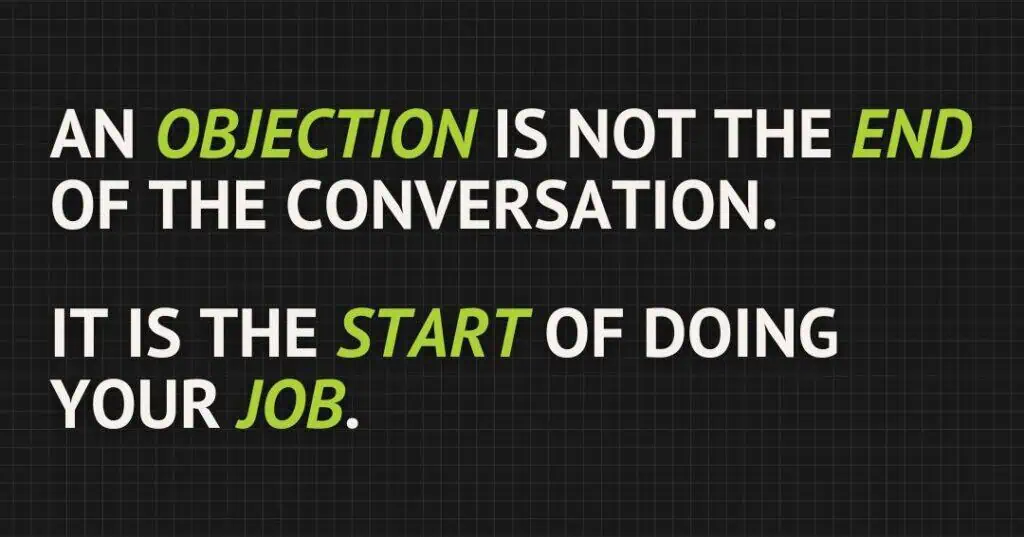
An objection is not the end of the conversation. It is the start of doing your job. The most skilled collectors treat each objection as information. It tells you what the barrier actually is. Address it, offer a solution, and if that solution is declined, offer the next one. When all solutions have been offered and declined, it is appropriate to inform the patient that the account will proceed to the next step in the collection process.
That phrase carries real weight. And it should. The uncertainty about what “next step” means can be a powerful motivator. But the threat must be real. Telling a patient with no income that a lawsuit is coming when there is no intention of filing one is not firm collections. It is deception. That is where the industry earns its worst reputation, and it is the line every ethical collector must never cross.
Kinum’s two-phase collection process provides a clear escalation ladder: from automated reminders to direct collection contact to professional collectors to, when warranted, legal intervention through a nationwide network of attorneys. Each step is proportional to the account and the situation.
What to Look for in a Medical Collections Partner
Choosing the right agency for your practice is not just about recovery rates. It is about who represents you in a conversation with the patients you depend on.
Here is what to look for:
- Contingency-based pricing. No upfront cost. You pay only when the agency recovers. This aligns the agency’s incentives with yours.
- HIPAA-trained staff. Every collector who touches patient accounts must understand how to handle protected health information. Ask specifically, not just generally.
- Consistent monitoring. The best agencies monitor every call, not a sample. Knowing that every interaction is reviewed changes how collectors show up. The standard at high-performing agencies is simple: always assume you are being recorded, because you are.
- Patient-first communication protocols. Ask what the agency’s first contact looks like. Is it a letter in your name? A direct collection demand? The approach in Phase 1 matters for your patient relationships and for patient balance recovery rates.
- Verifiable results. Google reviews from patients are a direct window into how the agency operates. A 4.8 rating across thousands of patient reviews is not luck. It is culture.
Kinum’s medical debt collection services are built around exactly these principles, serving healthcare providers across all 50 states with no upfront cost.
Frequently Asked Questions
What is the best practice for collecting medical debt?
The best practice starts before the account ages: clear, timely communication with the patient about their balance, payment options, and the consequences of non-payment. Once an account moves to collections, the most effective approach is to acknowledge the patient’s situation first, then work toward a structured resolution. Compliance with HIPAA and the FDCPA is required, but the real standard is whether the patient feels treated with dignity throughout the process.
How do you collect medical debt without damaging patient relationships?
By separating the collection process from the care relationship. Using a third-party agency means your staff does not have to make uncomfortable payment calls, and the process is handled by collectors trained specifically for patient communication. The agency represents your practice, so choosing one with strong patient reviews and documented communication standards is essential. Patients who feel respected during collections are more likely to return and less likely to file complaints.
Is medical debt collection HIPAA compliant?
It must be. Any third-party collector handling patient accounts is considered a business associate under HIPAA and must sign a Business Associate Agreement (BAA) with the covered healthcare entity. They are legally required to protect patient health information in all communications. Before engaging any collections agency, confirm that a BAA is in place and that collectors receive HIPAA-specific training.
When should a medical practice use a third-party collection agency?
Most practices benefit from bringing in a third-party partner before accounts reach 90 days past due. The older a balance gets, the harder it is to collect. A two-phase approach, starting with low-cost early intervention in your name and escalating to professional collections, tends to produce the highest recovery rates while keeping costs controlled and patient relationships intact.
The Bottom Line on Medical Debt Recovery
Effective medical debt recovery is not about pressure. It is about process, consistency, and treating every patient like a person with a reason for their situation, even when that reason takes time to uncover. Practices that partner with the right agency, follow a structured escalation process, and demand accountability from their collections team consistently recover more while protecting the relationships that sustain their practice.
If your AR has been sitting longer than it should, Kinum works with healthcare providers nationwide at no upfront cost. Get in touch to learn how the two-phase process works for your practice.