


Extending credit means letting a customer receive goods or services now and pay for them later, usually within a set number of days. In business-to-business sales, this is often called trade credit, and common terms include net 30 or net 60. Offering credit can grow sales and loyalty, but it also means the business carries the risk of not getting paid.
This guide is for business owners, finance leads, and office managers deciding whether to offer credit or tighten their existing terms. It covers the real benefits, the risks to plan for, how to set terms that protect the business, and what to do when a credit customer stops paying.
Key Takeaways
- Extending credit lets customers buy now and pay later, which works like a short-term, unsecured loan from the business.
- Offering credit can raise order sizes, build loyalty, and help a business compete with rivals that already offer terms.
- The main risks are slower cash flow, extra admin work, and customers who pay late or never pay.
- A written credit policy, a credit application, and clear payment terms prevent most credit problems before they start.
- Stating terms up front rarely costs a business good customers, and it makes late accounts easier to manage.
- When a credit customer stops paying, quick follow-up and a clear escalation plan protect both cash flow and the relationship.
What Extending Credit to Customers Means
When a business extends credit, it delivers the product or completes the work before collecting payment. The customer then has a set window to pay the invoice in full. Under net 30 terms, for example, payment is due 30 days after the invoice date.
This is different from simply accepting credit cards. When a customer pays by card, the card company pays the business and takes on the risk. When the business extends its own credit, it becomes the lender. If the customer does not pay, the business absorbs the loss.
Credit is common in many industries. Suppliers give credit to contractors, service firms bill clients after the job is done, and medical and dental practices often let patients pay their share after insurance processes a claim. In each case, the business is trusting the customer to pay on time.
Benefits of Offering Credit
Extending credit is a pro-customer choice, and it can pay off in several ways.
- Bigger orders. Customers who do not have to pay up front often buy more at once, which raises the average sale.
- Stronger loyalty. Customers value the trust that credit shows, and they tend to return to vendors that make buying easy.
- A competitive edge. In many B2B markets, buyers expect terms. A business that only accepts payment up front can lose deals to rivals that offer net 30.
- A better reputation. Offering terms signals that a business is stable and confident in its own cash flow.
These benefits are real, but they hold up only if the business has a plan for customers who don’t pay on time.
The Risks to Plan For
Every credit sale is a small loan with no collateral. Until the invoice is paid, the business has spent money on materials, labor, or time without getting anything back. That gap can strain cash flow, especially for a small business.
The most common risks include:
- Slower cash flow. Money tied up in open invoices cannot be used for payroll, inventory, or growth.
- Admin costs. Someone has to send invoices, track due dates, and follow up on late accounts.
- Late payers. Some customers pay slowly by habit, and slow payers often get slower over time.
- Nonpayment. A small share of customers will not pay at all, and those losses come straight out of profit.
Planning ahead for these gaps is part of sound cash flow management. For a business that offers credit, that plan should include clear rules for who gets credit and what happens when a payment is missed.
How to Set Credit Terms That Protect the Business
You can prevent most credit problems with a few simple steps. These steps work for a small service business and a larger supplier.
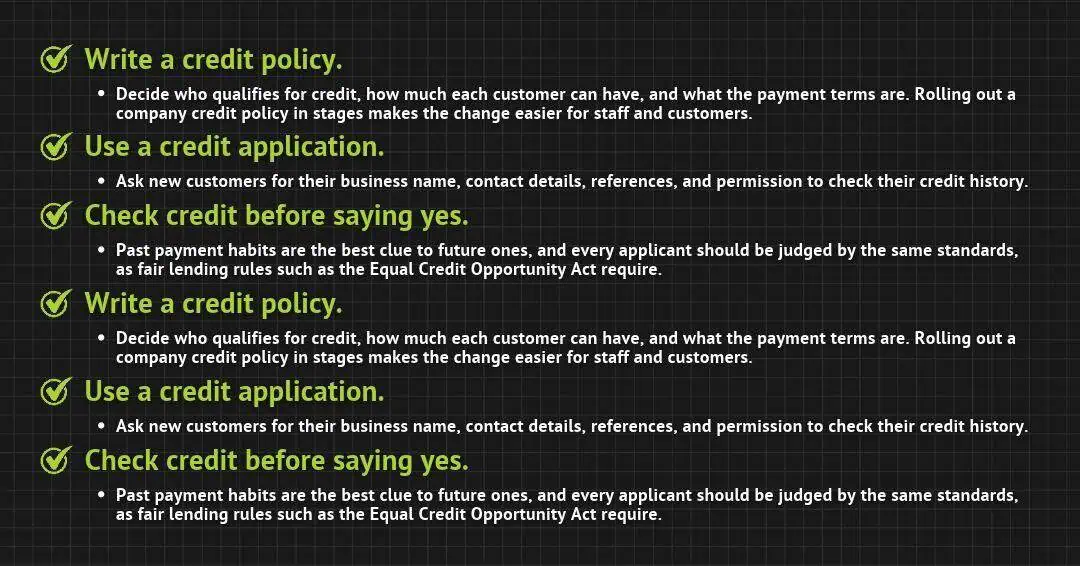
- Write a credit policy. Decide who qualifies for credit, how much each customer can have, and what the payment terms are. Rolling out a company credit policy in stages makes the change easier for staff and customers.
- Use a credit application. Ask new customers for their business name, contact details, references, and permission to check their credit history.
- Check credit before saying yes. Past payment habits are the best clue to future ones, and every applicant should be judged by the same standards, as fair lending rules such as the Equal Credit Opportunity Act require.
- Set a credit limit. Start new customers with a modest limit and raise it as they build a track record.
- Put the terms in writing. Show the due date, payment methods, and any late fees on every quote, contract, and invoice.
- Get the customer to agree. A signed agreement or written approval removes any doubt about what was promised.
Many owners worry that clear terms will scare customers away. People often think stating policies up front will cost them business, but the opposite is usually true. Customers respect clear rules, and clear rules make late accounts easier to handle. A written late fee policy is part of that same groundwork.
Flexible Terms vs. Letting Accounts Slide
Some flexibility is healthy. A loyal customer who hits a rough patch may need a short extension or a payment plan. The key is knowing the difference between being flexible and letting customers walk all over the business.
A useful test is whether the business is still setting the terms. A payment plan works when the business decides the amount and schedule and the customer agrees in writing. It does not work when a customer sends small, random payments on their own schedule and the balance never really goes down.
The table below shows the difference.
| Healthy Flexibility | Letting the Account Slide |
|---|---|
| The business sets the payment plan amount and dates | The customer decides what to pay and when |
| The plan is in writing and signed | The plan is a verbal promise |
| Payments arrive on schedule | Payments are small, late, or missing |
| The balance shrinks each month | The balance stays about the same for months |
What to Do When a Credit Customer Stops Paying
Even with a strong policy, some customers will fall behind. Acting quickly gives the business the best chance to get paid. The older a balance gets, the harder it is to collect.
Start with a friendly reminder soon after the due date, then follow up with a second notice and a phone call if needed. If those steps do not work, a final notice should explain what happens next. Many of the same tips to keep customers paying on time also help bring late accounts back on track.
When an account reaches 60 to 90 days past due with no response, internal follow-up usually stops working. At that point, a collection partner can step in. Kinum’s process starts with reminders sent in the client’s own name and moves to professional collectors only if needed, with no upfront cost.
FAQ
What does extending credit mean?
Extending credit means letting a customer receive goods or services now and pay later, usually within a set number of days. The business acts as the lender until the invoice is paid. Common terms include net 30, where payment is due 30 days after the invoice date. Because there is no collateral, the business carries the risk if the customer does not pay.
Should a small business extend credit to customers?
A small business should extend credit when it helps win or keep customers and the business can handle the wait for payment. Many B2B buyers expect terms, so offering them can be a competitive need. The safest approach is to start with a written credit policy, check each customer’s history, and set modest limits for new accounts.
What are the risks of extending credit?
The main risks of extending credit are slower cash flow, added admin work, late payments, and customers who never pay. Each open invoice is money the business has earned but cannot use yet. A credit application, credit limits, written terms, and a clear follow-up schedule all help reduce these risks without giving up the benefits of offering credit.
What is trade credit?
Trade credit is credit that one business extends to another for goods or services, with payment due later under set terms. Net 30 and net 60 are common examples. Trade credit helps buyers manage their own cash flow while helping sellers win larger orders. It is a very common way for businesses to fund short-term purchases.
Offering Credit With a Plan for Late Payers
Extending credit to customers can grow sales, build loyalty, and help a business compete. Those benefits last when the business pairs them with a written policy, clear terms, and a plan for accounts that fall behind.
Businesses that already offer credit and are seeing more late accounts do not have to chase every balance alone. Kinum’s accounts receivable collection services help recover past-due balances while protecting customer relationships. Businesses can contact Kinum to learn how the process works.