


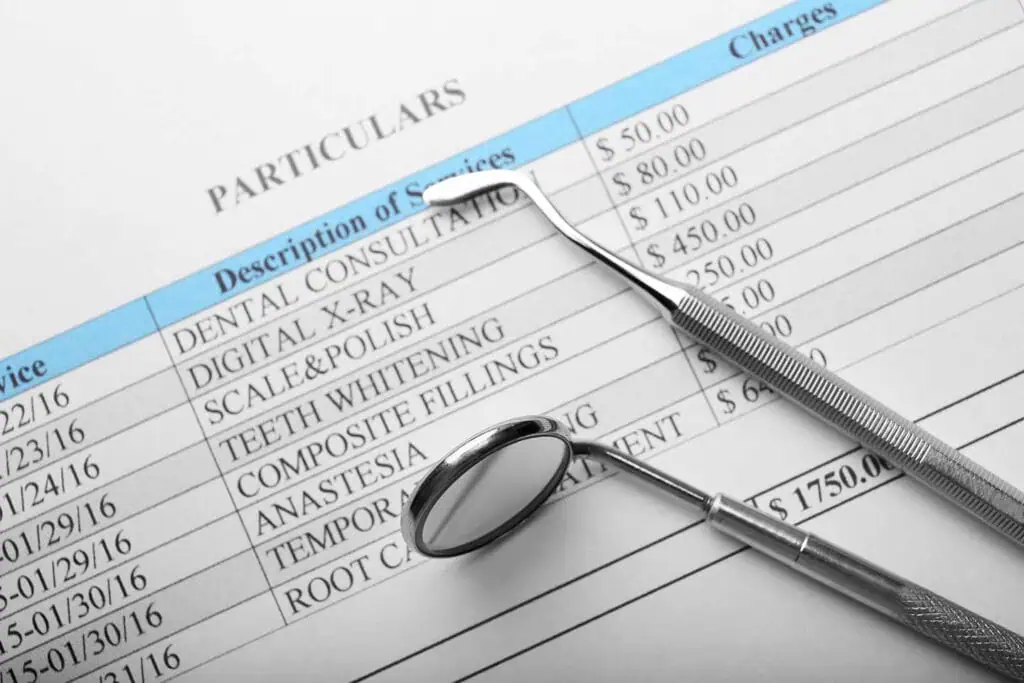
Many dental offices struggle with their collections process. Dental procedures can be quite pricey, so dental practices naturally offer patients some form of financing. Whether you agree on an in-house payment plan or outsource your financing to a different company, there are some things you can do that, when done correctly, will help you collect on your accounts receivable more efficiently.
The ADA Health Policy Institute considers 96 to 99 percent of adjusted production a healthy collection rate for a general practice, so that benchmark is worth keeping in mind as you work through the strategies below. After all, money today is always better than money tomorrow.
Create a Written Payment Policy
One of the most effective changes a dental practice can make is to put a payment policy in writing and have every patient sign it before treatment. A payment policy should cover when payment is expected, what payment types are accepted, the financing options available, and what happens if a balance goes unpaid. Make sure your entire front desk team knows the policy well enough to explain it consistently, since inconsistent enforcement from one staff member to the next is one of the fastest ways a payment policy stops working.
Ask for Payment at the Time of Service
Avoid chasing patients down for payment later by setting the expectation that payment, or at least the patient’s portion, is due at check-in or check-out. Communicate this clearly to avoid confusion when the patient arrives. Offering a small discount for payment at the time of service, or for paying in full rather than financing, gives patients an extra reason to pay before they leave rather than after.
It can feel uncomfortable to ask directly, especially with a patient you have known for years, but simply asking works far more often than practices expect. Each time it happens, it gets easier, and patients quickly learn that payment is part of the visit rather than something to avoid.
Offer Payment Options and Financing
Not every patient can pay in full, and that does not have to mean an unpaid balance. For patients who cannot pay upfront, offer a structured payment plan, whether managed in-house or through a third-party financing partner. You can require a partial payment before service with the remainder due at the time of service, or spread the balance across a monthly plan.
Electronic billing that lets patients log in and pay on their own schedule also removes a common excuse for delay. Keep the menu of options reasonably simple. Too many choices tend to confuse patients rather than help them.
Discounts for Early or Time-of-Service Payment
Offering a modest discount for patients who pay when they schedule their appointment, rather than waiting until after the visit, is a straightforward way to encourage on-time payment. Profitability may decrease slightly on that particular visit, but it is a small trade-off against the cost of carrying unpaid balances on your books for months.
Make Paying Easy
Simplicity matters. The ability to pay online at any hour, rather than mailing a check or calling during business hours, makes patients meaningfully more likely to pay promptly; the same principle that applies to getting any customer to pay on time, not just dental patients.
Reaching out through a patient’s preferred method of communication also makes a real difference. A reminder by email does little good for a patient who never checks their inbox; a text or a phone call may work far better for that same person. It takes a bit more effort on the practice’s side to track preferences, but patients respond.
Relationships Matter
Patients are far less likely to pay a bill from someone who feels like a nameless vendor, and far more likely to pay a friendly office they feel genuinely known by. Simple things move this needle: a smile, remembering a patient’s name, taking a real interest in their life to the extent they are comfortable sharing. Treating someone as a person rather than an account on a ledger consistently improves how willingly and how quickly they pay.
Train Your Team on Following Up
Every member of your front desk team should know how to follow up with a patient who did not pay at the time of service, including how to be firm without being unpleasant. This is a skill, not an instinct, and it is genuinely uncomfortable for staff who have never worked in a collections-adjacent role before.
If your team consistently struggles with this part of the job, that is a sign the follow-up may be better handled by a partner who does it full time rather than left as an occasional, dreaded task for whoever is at the front desk that day.
When In-House Efforts Are Not Enough
If you have implemented a clear payment policy, asked for payment at the time of service, and trained your team on follow-up, and your practice is still carrying a growing balance of unpaid patient accounts, it may be time to bring in a specialist. Certain signs point clearly to the need for a medical or dental collection partner, including rising days in A/R and staff spending more time chasing balances than serving patients.
Kinum, Inc. has developed a two-phase method for collecting accounts receivable that helps speed debt recovery while keeping costs to a minimum, including legal intervention when needed. We work with dental practices, along with clients in every other industry, to free up time that could be spent on patient care instead of chasing payments.
Frequently Asked Questions
How can a dental practice reduce unpaid patient balances?
A written payment policy signed by every patient, collecting payment at the time of service, and offering structured payment plans for larger balances are the three changes with the biggest impact.
Should dental practices offer a discount for early payment?
Yes. A small discount for payment at scheduling or at the time of service often pays for itself by reducing balances that go unpaid or require follow-up.
When should a dental practice send a patient balance to collections?
Once a practice’s own payment policy, time-of-service collection, and structured follow-up have been tried and a balance is still aging past 90 days, a dental-experienced collection partner typically recovers more than continued in-house follow-up.
Rely on Kinum, Inc.
Another strategy for dental debt collection is to rely on a company that specializes in it. To learn more about our process for dental practices, contact us today.